

Ear protection in indoor entertainment is the practice of using physical devices to reduce harmful sound levels before they reach the delicate structures of the inner ear. Concerts, sports arenas, movie theaters, and indoor play centers routinely push sound past 85 decibels, the threshold above which permanent hearing damage begins. Children face even greater risk because their smaller ear canals amplify sound more intensely than adult ears do. The role of ear protection in indoor entertainment is not optional comfort gear. It is a direct defense against irreversible auditory harm for every person in the room, especially the youngest ones.
What noise levels in indoor entertainment cause hearing damage?
Hearing damage is not about a single loud moment. It is about cumulative exposure above a critical threshold. Exposure to 85 dBA is considered risky over 8 hours, and every 5 dBA increase cuts that safe window in half. A rock concert at 100 dB gives you roughly 15 minutes of safe exposure without protection. An indoor sporting event at 95 dB allows about an hour. Most people stay far longer than that.
The problem is that indoor venues concentrate sound. Hard walls, low ceilings, and reflective surfaces bounce noise back at the audience. A venue that measures 90 dB at the mixing board may register 95 dB or higher near the stage or speaker stacks. Children sitting closer to floor-level speakers at family entertainment centers face direct, unfiltered exposure.
Why children are at higher risk
Children’s developing ears and smaller ear canals make them more susceptible to faster and greater noise damage than adults at identical sound levels. Normal conversation sits around 60–70 dB. Exposure above 85 dB can cause faster injury to a child’s ears than to an adult’s. The damage is cumulative and silent. A child will not feel pain until the harm is already done.
| Venue type | Typical sound level | Safe exposure without protection |
|---|---|---|
| Movie theater (action film) | 85–95 dB | 8 minutes to 1 hour |
| Indoor concert or live music | 95–110 dB | 4 minutes to 1 hour |
| Indoor sports arena | 90–105 dB | 15 minutes to 2 hours |
| Indoor play center or arcade | 85–95 dB | 8 minutes to 1 hour |
These numbers assume continuous exposure. Real events involve peaks and lulls, but the peaks are what cause the most damage. Protecting ears indoors means accounting for those spikes, not just the average reading.
How do different types of ear protection work for indoor entertainment?
Ear protection for indoor entertainment falls into two main categories: earplugs and earmuffs. Each works by creating a physical barrier that reduces the sound pressure reaching the eardrum. The key performance metric is the Noise Reduction Rating, or NRR, which measures how many decibels a device reduces in controlled lab conditions.
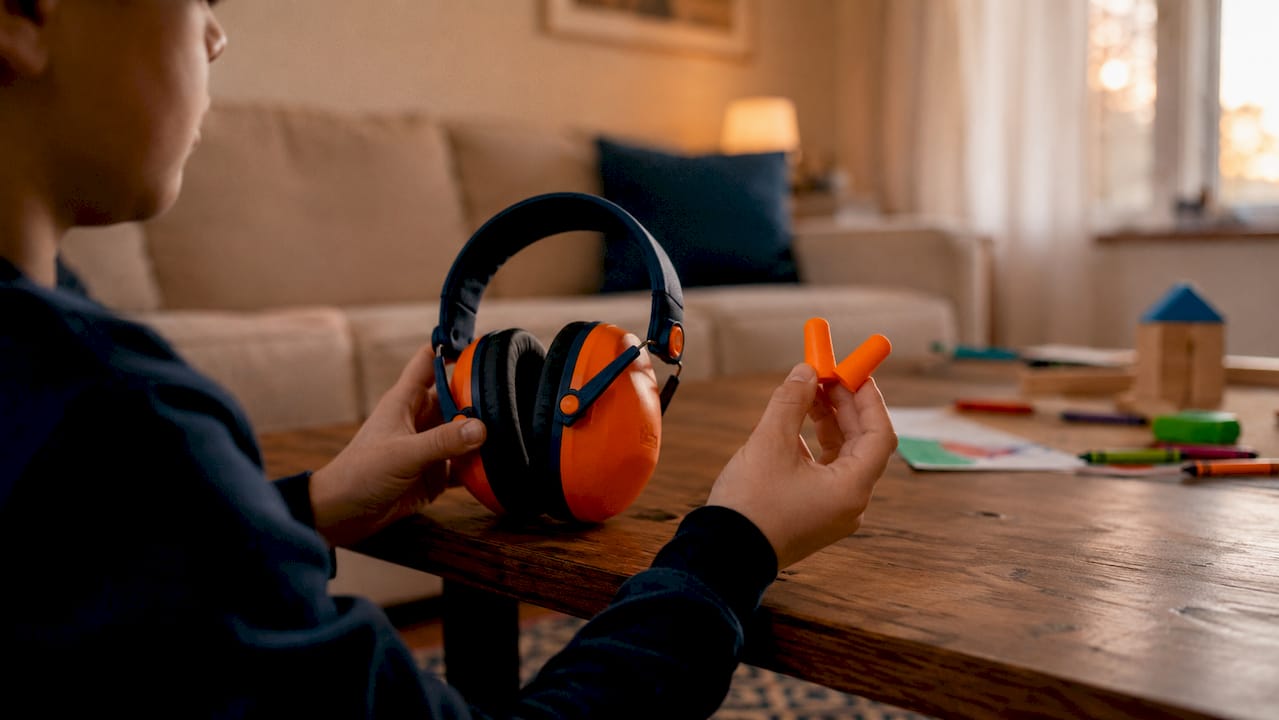
Audiologists recommend devices with NRR ratings between 15–30 dB, with 23–25 dB being optimal for most live entertainment settings. That range protects the hair cells inside the cochlea while still allowing you to hear speech and music clearly. Going too high on NRR at a concert creates a muffled, disconnected experience that discourages consistent use.
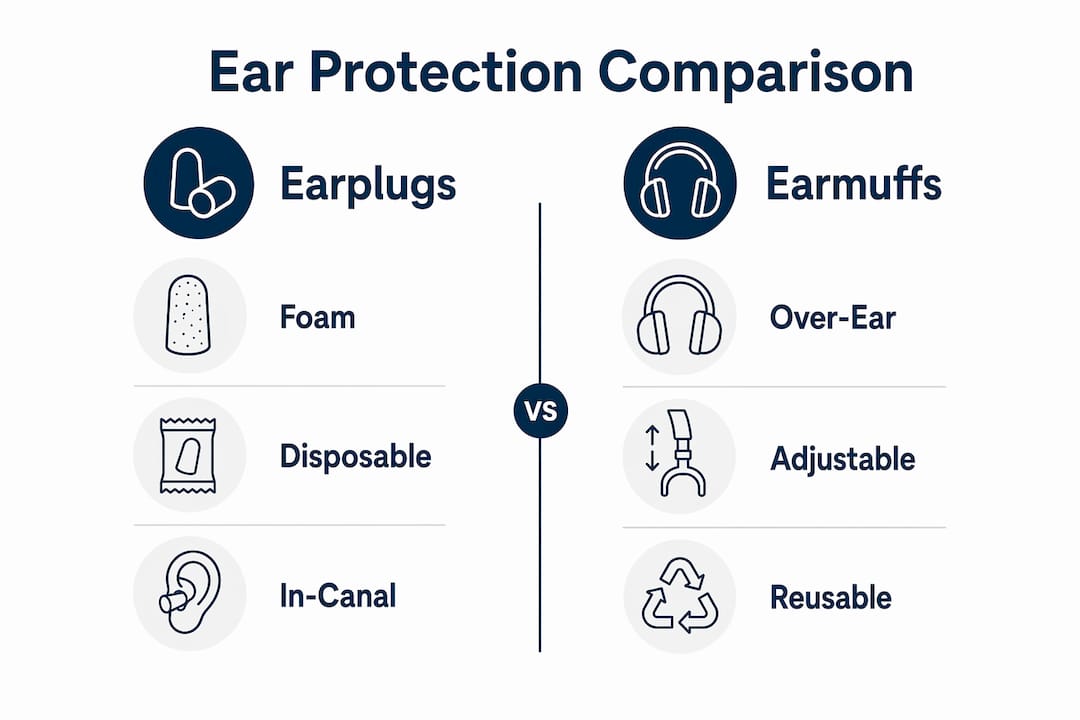
Earplugs vs. earmuffs: which works better?
Earplugs insert into the ear canal and reduce sound by blocking the canal directly. Foam disposable plugs are inexpensive and widely available, but proper insertion and fit are critical. Ill-fitting foam plugs provide little to no real protection. Custom-fit or pre-molded plugs offer a better seal and greater comfort, making them the preferred choice for frequent concert-goers.
Earmuffs sit over the entire ear and create a sealed cup around it. They are easier to fit correctly, especially on children, and do not require any insertion technique. For kids and sensory-sensitive individuals, earmuffs are generally the more reliable option because fit compliance is higher.
High-quality acoustic-filter earplugs lower volume without muffling sound quality. They turn the volume down, not off. This matters for parents who worry that ear protection will make an event less enjoyable for their child. The experience remains intact. The damage does not.
| Protection type | Best for | NRR range | Fit difficulty |
|---|---|---|---|
| Foam disposable earplugs | Adults, occasional use | 29–33 dB | High (requires correct roll and insertion) |
| Pre-molded earplugs | Adults, frequent events | 20–27 dB | Medium |
| Acoustic-filter earplugs | Music events, concerts | 15–25 dB | Medium |
| Over-ear earmuffs | Children, all indoor events | 22–31 dB | Low |
Pro Tip: If you are buying ear protection for a child under 5, choose over-ear earmuffs with an adjustable headband. They are easier to keep in place and harder for small hands to remove mid-event.
Why children and sensitive individuals need special ear protection
Children are not small adults when it comes to hearing safety. Their auditory systems are still developing, and the noise safety risks they face at indoor entertainment venues are proportionally greater. A child’s ear canal is shorter and narrower, which means sound pressure builds up more quickly at the eardrum. The same concert that gives an adult a mild headache can cause measurable hearing threshold shifts in a child.
Sensory-sensitive individuals face a different but equally serious challenge. Conditions like hyperacusis (extreme sensitivity to everyday sounds) and misophonia (strong emotional reactions to specific sounds) make loud indoor environments physically painful, not just uncomfortable. Specialized ear protection helps these individuals manage sensory overload by selectively muffling triggering frequencies and reducing pain.
For neurodivergent individuals, including those with autism spectrum disorder or sensory processing differences, ear protection is critical not just for volume control but for managing sensory overload and avoiding pain. A child who can attend a birthday party or a movie without shutting down is a child who gets to participate fully in life.
Practical steps for parents and caregivers at indoor events:
- Bring ear protection to every event where sound levels are unpredictable, including movie theaters, bowling alleys, and indoor sports games.
- Put earmuffs on before entering the venue, not after the noise starts. Damage begins immediately upon exposure.
- Choose child-specific designs with softer materials and smaller cup sizes. Adult earmuffs do not seal properly on small heads.
- Let children pick colors or patterns they like. Compliance improves significantly when kids feel ownership over their gear.
- Watch for signs of distress: covering ears, crying, or withdrawing. These are signals that current protection is insufficient.
What practical steps ensure effective ear protection indoors?
Consistent use is the single most important factor in hearing preservation. Studies link daily full use of hearing protection devices to lower hearing threshold shifts and reduced noise-induced hearing loss. Sporadic use, even with a high-NRR device, produces significantly worse outcomes than consistent use of a moderate-NRR device. Protection worn 80% of the time provides far less than 80% of the benefit because the unprotected windows are often the loudest moments.
Recognizing auditory fatigue is the second key habit. Ear fatigue after an event signals sensory overload and risk of acoustic injury. Many people mistake it for general tiredness. If your ears feel full, ring slightly, or sounds seem muffled after leaving a venue, your auditory system was under stress. That is the signal to increase protection at the next event, not to dismiss it.
Here is a practical routine for indoor entertainment events:
- Check the venue. Look up typical sound levels for the event type. Concerts and sports events routinely exceed 95 dB.
- Pack protection before you leave home. Earmuffs or earplugs left in the car are useless once you are inside.
- Fit before entry. Put on earmuffs or insert earplugs before walking through the doors.
- Take breaks. Step into a quieter lobby or hallway every 60–90 minutes during long events.
- Check fit mid-event. Earmuffs can shift during movement. Recheck the seal if you notice sound levels rising.
- Clean and store after use. Reusable devices last longer and perform better when maintained. Wipe earmuff cushions after each use and store in a case.
Pro Tip: Keep a spare pair of earplugs in your bag at all times. Venues rarely sell hearing protection on-site, and you will not always remember to pack yours.
Key takeaways
Ear protection in indoor entertainment is the most direct and reliable way to prevent permanent hearing damage for children and noise-sensitive individuals at concerts, sports events, and family venues.
| Point | Details |
|---|---|
| 85 dB is the damage threshold | Sound above 85 dBA causes hearing damage; safe exposure time halves with every 5 dB increase. |
| NRR 23–25 dB is the sweet spot | This range protects hearing while preserving sound clarity at live entertainment events. |
| Children need dedicated gear | Smaller ear canals amplify sound more; child-specific earmuffs provide a better seal and higher compliance. |
| Consistent use matters most | Daily use over years reduces noise-induced hearing loss far more than occasional high-NRR use. |
| Fit determines effectiveness | Ill-fitting foam plugs offer little protection; over-ear earmuffs are the most reliable option for kids. |
Why I think we have the ear protection conversation backwards
By Shari M. Murphy
Most parents I talk to think about ear protection after an event, when a child is complaining of ringing ears or refusing to go back to a venue. That is the wrong starting point. The conversation needs to happen before the tickets are purchased.
What I have observed over years of covering child health and safety is that ear protection gets treated as a niche concern, something for musicians or factory workers. Indoor entertainment venues are just as loud, and the audience is often far more vulnerable. A 3-year-old at an indoor birthday party with a DJ is not less at risk than a roadie at a stadium show.
The shift I find most encouraging is among younger parents who treat earmuffs the same way they treat sunscreen: non-negotiable, packed automatically, applied before exposure. That framing works. It removes the stigma and the debate. You do not argue about whether your child needs sunscreen at the beach. Ear protection at a loud event deserves the same default status.
For sensory-sensitive and neurodivergent children, the stakes are even higher. Ear protection is not just about decibels. It is about access. A child who can tolerate a movie theater or a family concert with the right gear gets to participate in experiences that would otherwise be off-limits. That is not a small thing.
The loud environment guide for sensory-sensitive kids from BANZ is one of the more practical resources I have seen for parents navigating this. It moves past the generic advice and addresses the real-world scenarios where protection matters most.
Normalize the gear. Pack it every time. The hearing your child has at 40 depends on the choices you make for them at 4.
— Shari M. Murphy
Protect your child’s hearing with BANZ
BANZ designs hearing protection specifically for children and sensory-sensitive listeners. Every product is built around the reality that kids move, resist, and need gear that stays in place without discomfort.
BANZ earmuffs feature adjustable headbands, soft cushioned cups, and NRR ratings suited for concerts, sports events, and indoor entertainment venues. Designs come in patterns and colors that kids actually want to wear, which is the detail that makes consistent use possible. BANZ has supported over 2 million families across six continents, and the free BANZ Protect app adds real-time noise monitoring so you always know when protection is needed. Browse the full range of baby hearing protection earmuffs and find the right fit for your child before the next event.
FAQ
What is the safe noise level for children at indoor events?
Exposure above 85 dB can cause faster hearing injury in children than in adults. Most indoor entertainment venues exceed this level, so ear protection is recommended for any event lasting more than a few minutes.
What NRR rating should I look for in children’s earmuffs?
Audiologists recommend an NRR of 23–25 dB for most indoor entertainment settings. This level protects hearing while still allowing children to hear speech and enjoy the event.
Can ear protection help children with sensory sensitivities?
Yes. Specialized ear protection helps children with hyperacusis, misophonia, or sensory processing differences by reducing sensory overload and filtering triggering frequencies without fully blocking sound.
How do I know if my child needs ear protection at an event?
If the venue is a concert, indoor sports game, movie theater showing an action film, or any space where you need to raise your voice to be heard, the sound level is high enough to warrant protection for your child.
Does wearing earplugs ruin the sound quality at a concert?
No. Acoustic-filter earplugs reduce volume without muffling the audio. They preserve sound clarity while lowering the decibel level to a safe range.
Recommended
- Kids Noise Safety Resource Library | Hearing Protection & Sensory Support | BANZ® – BANZ® Carewear USA
- Noise Safety for Children: Everyday Sounds Parents Should Watch |BANZ® – BANZ® Carewear USA
- Free Kids Hearing Safety Resources: NIH Noisy Planet Downloads + BANZ Family Guide – BANZ® Carewear USA
- How Earmuffs Reduce Sound Explained for Parents – BANZ® Carewear USA